Layouts that arrive with their specification attached.
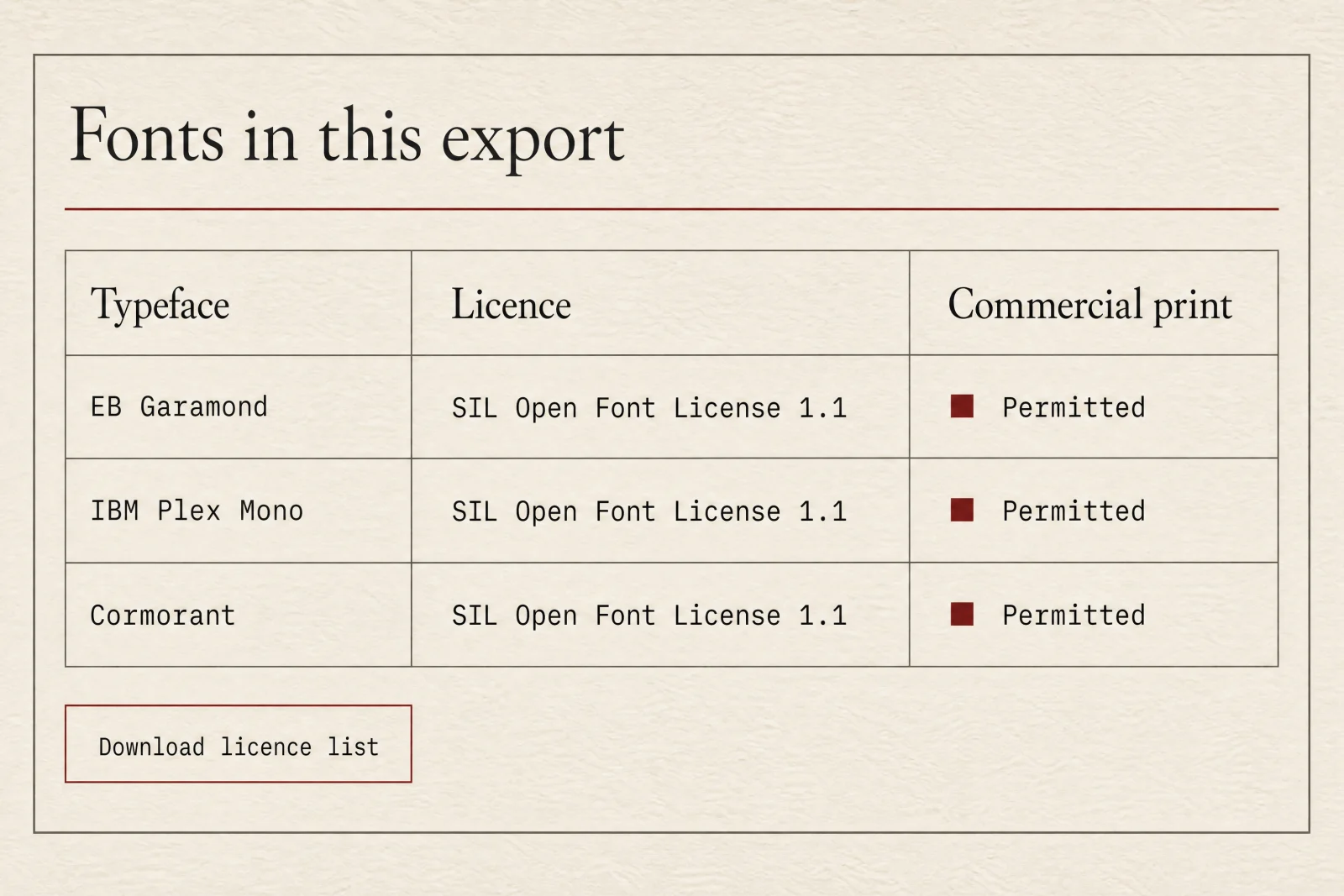
A card is only finished when it can be printed. Every layout here carries the numbers a printer will ask for, both colour previews, and the licence of every typeface inside it — before you choose it, not after.
- Options
- 4 to 6 per request
- Bleed
- 3 mm, fixed
- Safe margin
- 5 mm, fixed
- Resolution
- 300 dpi, fixed
- Colour
- RGB and CMYK
- Formats
- PDF, PNG, SVG
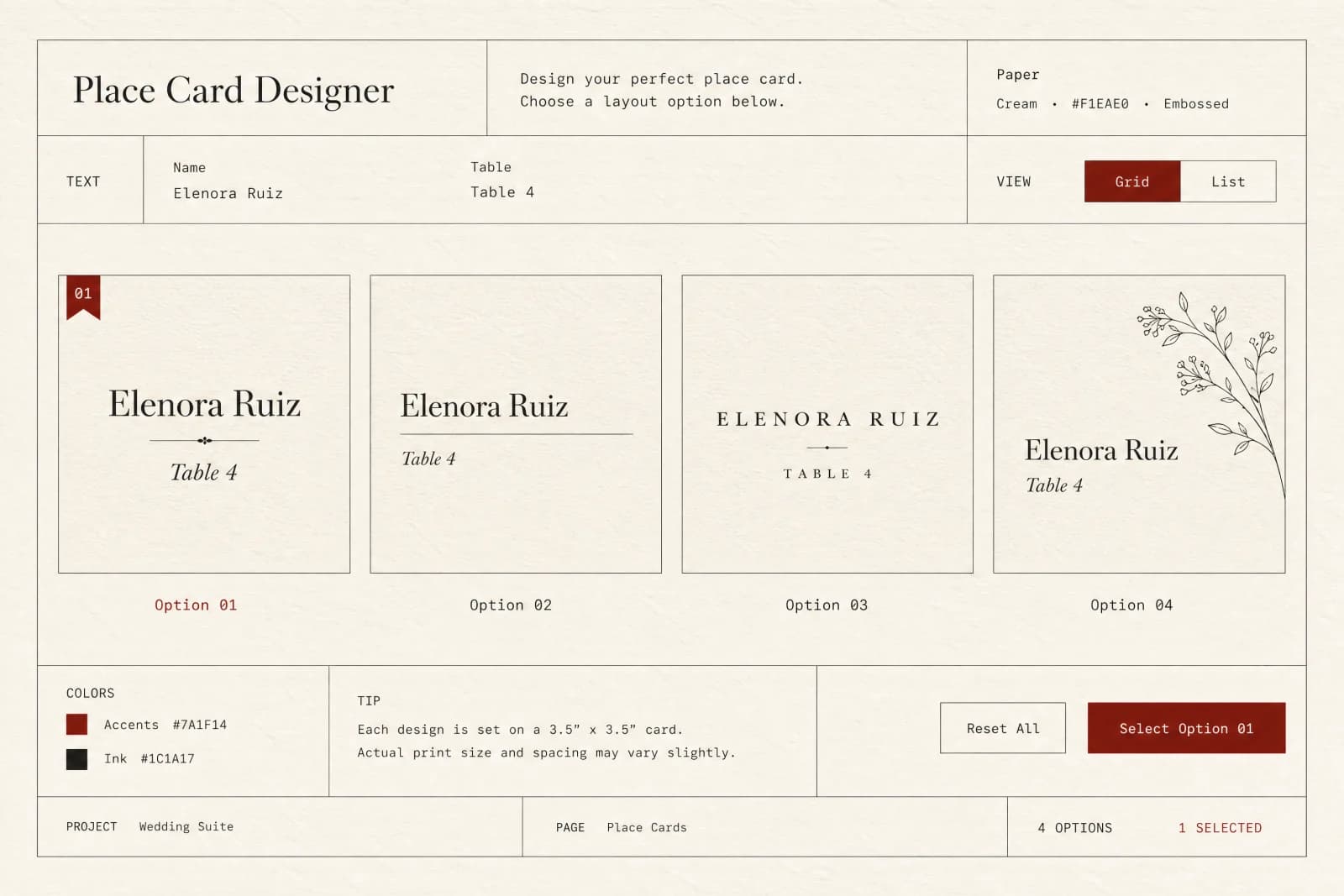
Pick the object first, then the look.
The physical card decides most of the layout. Choose it up front and the type is set inside real margins from the beginning rather than fitted to them afterwards.
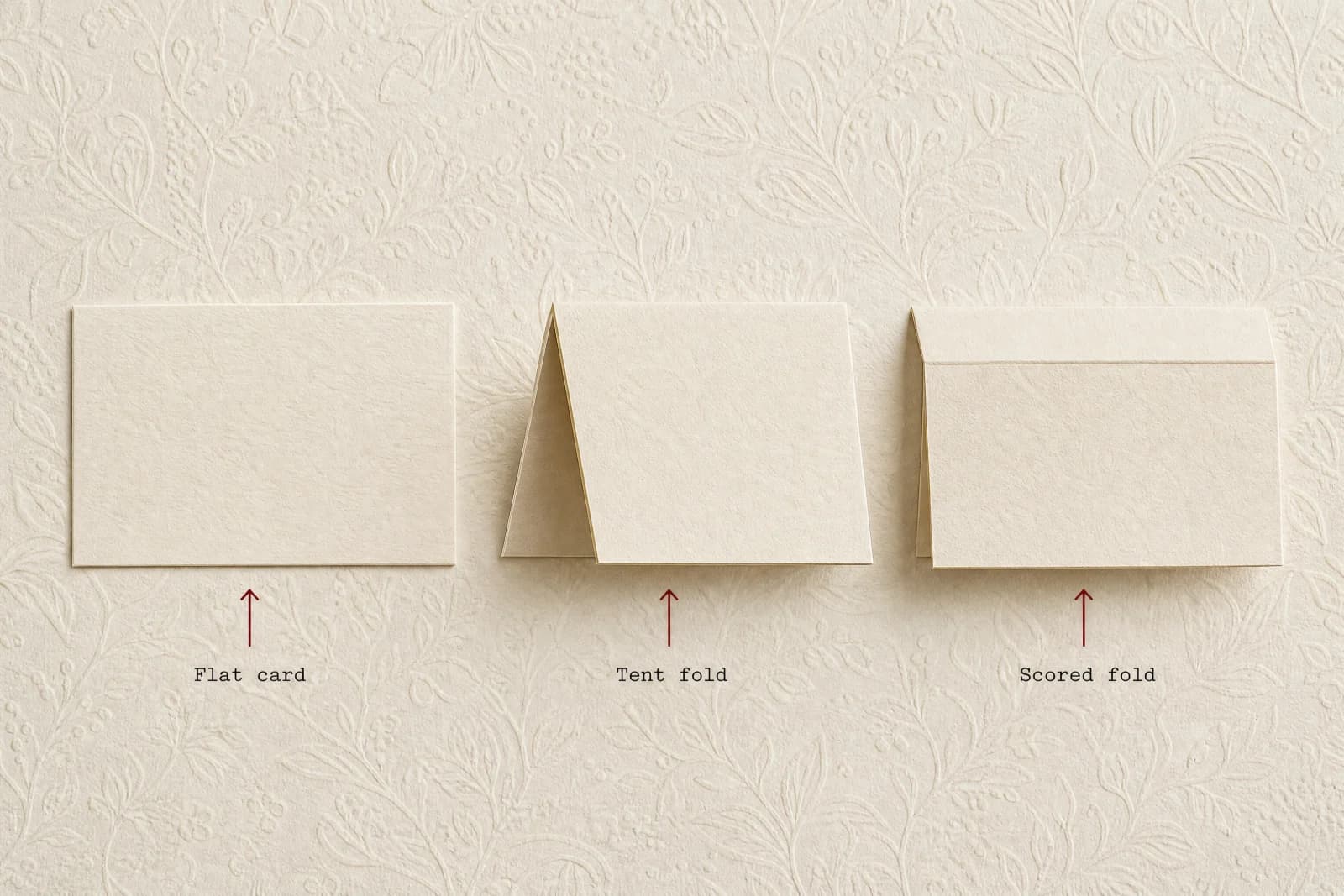
- Name card
- 85 × 55 mm
- Flat, the common place card
- Folded
- 90 × 50 mm
- Scored and folded flat-topped
- Tent
- 100 × 70 mm
- Stands on the plate or cloth
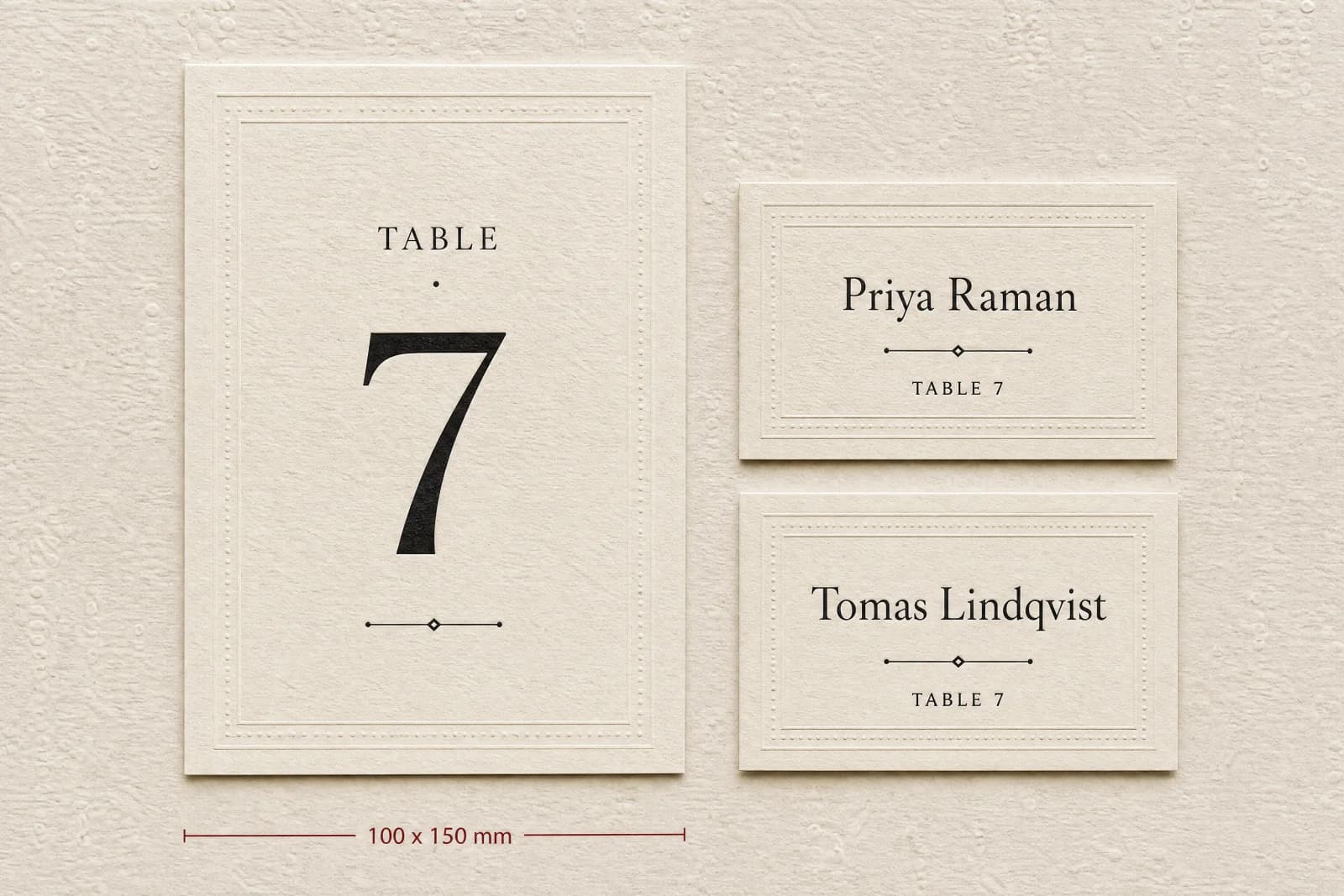
- Table number
- 100 × 150 mm
- Same system, scaled up
- Custom
- Any size in mm
- Bleed and margin scale with it
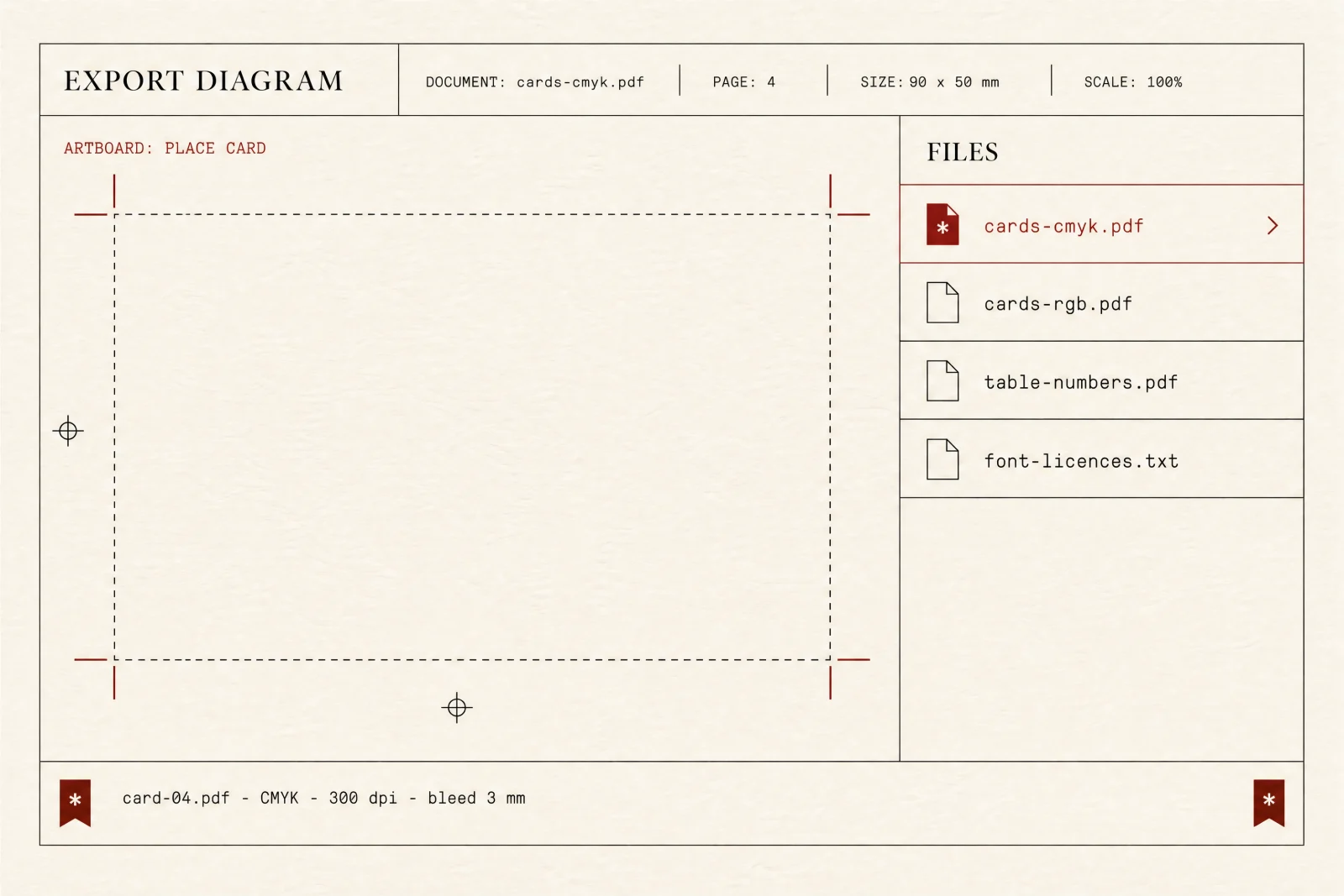
The same six numbers on every single output.
These are not settings you can lower to make a file smaller. They are fixed, they travel with the artwork, and they are printed on the specification sheet in the export folder.
- Trim
- Your chosen size, in mm
- Bleed
- 3 mm on all four edges
- Safe margin
- 5 mm inside the trim
- Resolution
- 300 dpi
- Colour
- RGB preview + CMYK conversion
- Fonts
- Name and licence type, per face
Crop marks are a toggle at export. Registration targets are added to imposed sheets automatically.
Two previews, shown together, because they do not match.
Your screen emits light and a press puts ink on paper. The difference is not a rendering error, it is physics, and hiding it until the delivery arrives helps nobody.
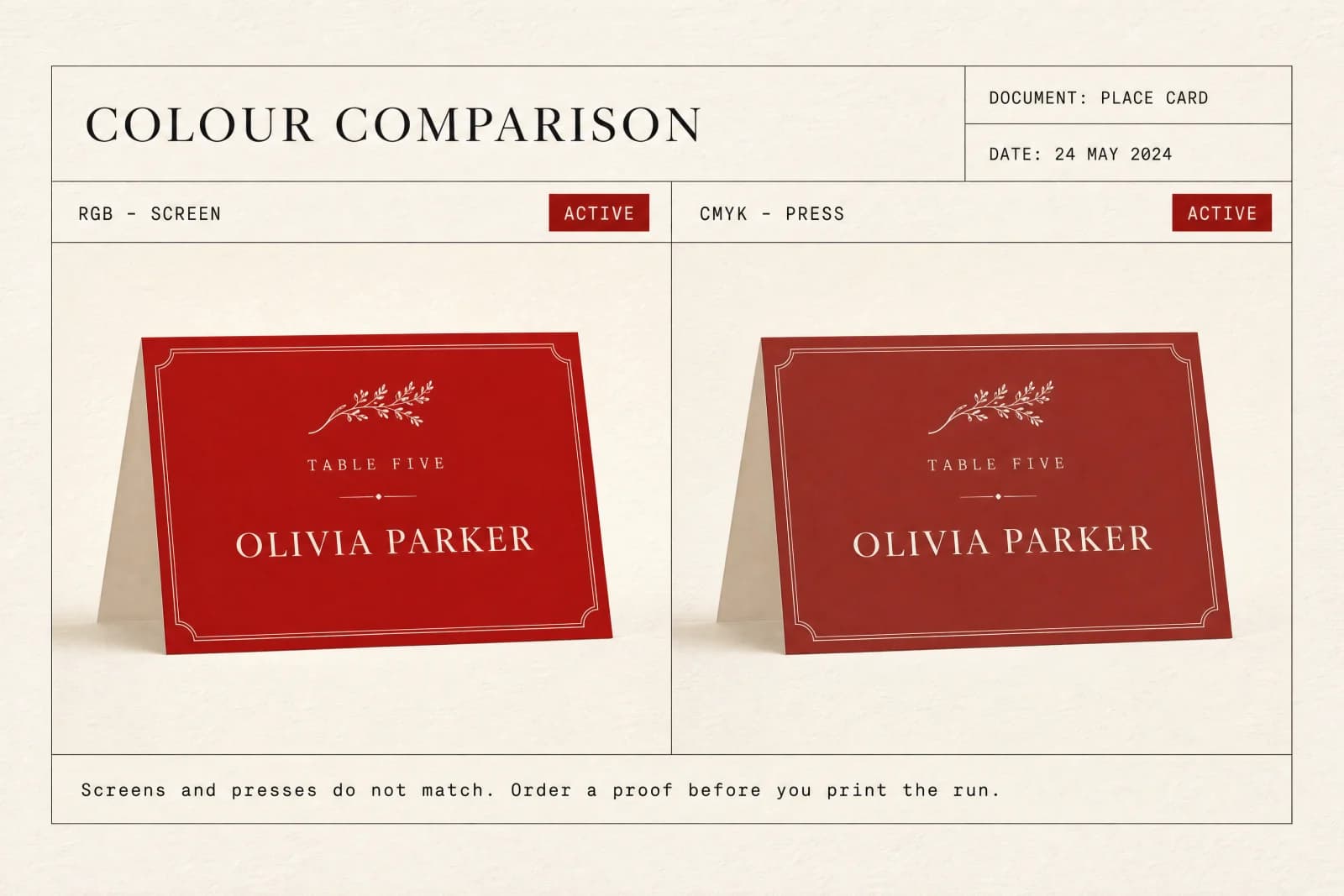
- Paper stock changes both colour and the way ink sits
- Uncoated card absorbs more ink and reads darker
- Two printers with the same file will not match each other exactly
- We give weight and finish suggestions, and recommend no supplier
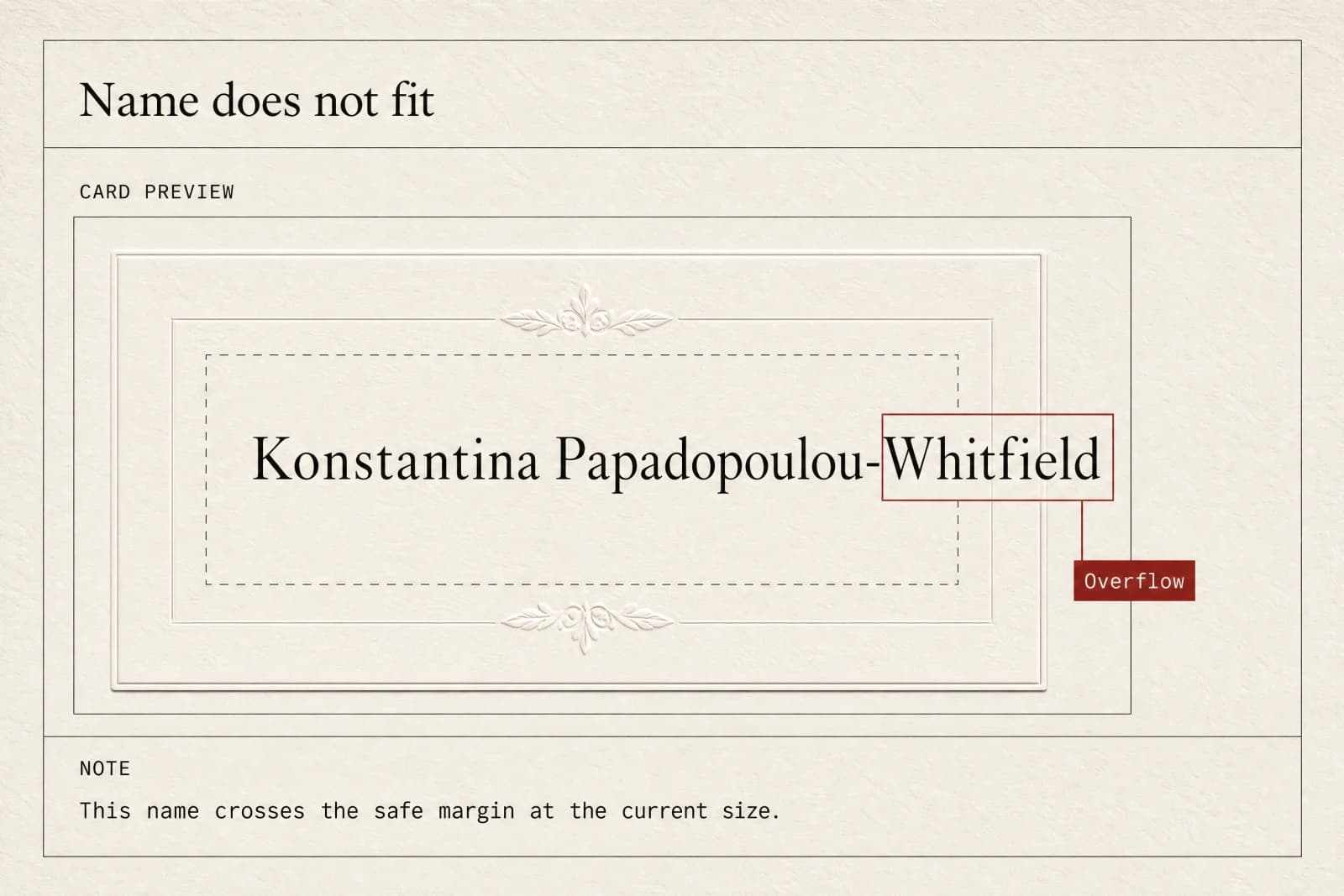
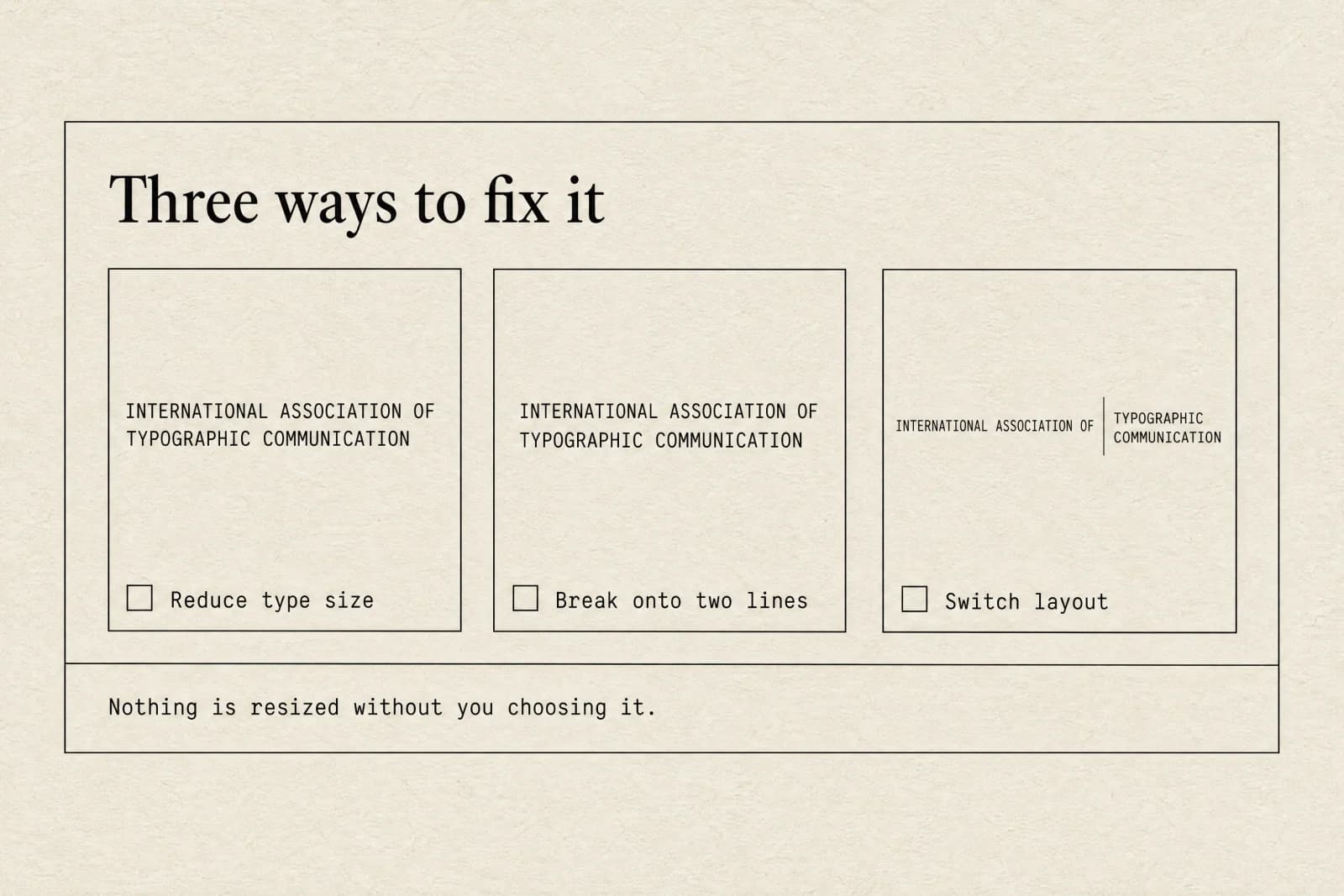
A long name is a decision, not an automatic font size.
When a name crosses the safe margin, the tool stops and shows you. It does not shrink the type by a point and move on, because a card that is quietly two sizes smaller than the rest is its own kind of mistake.
Your files get printed, so the licence matters.
If a card is set in a typeface that is not licensed for commercial print and embedding, the exposure lands on you. So it is handled here rather than mentioned in a footnote.
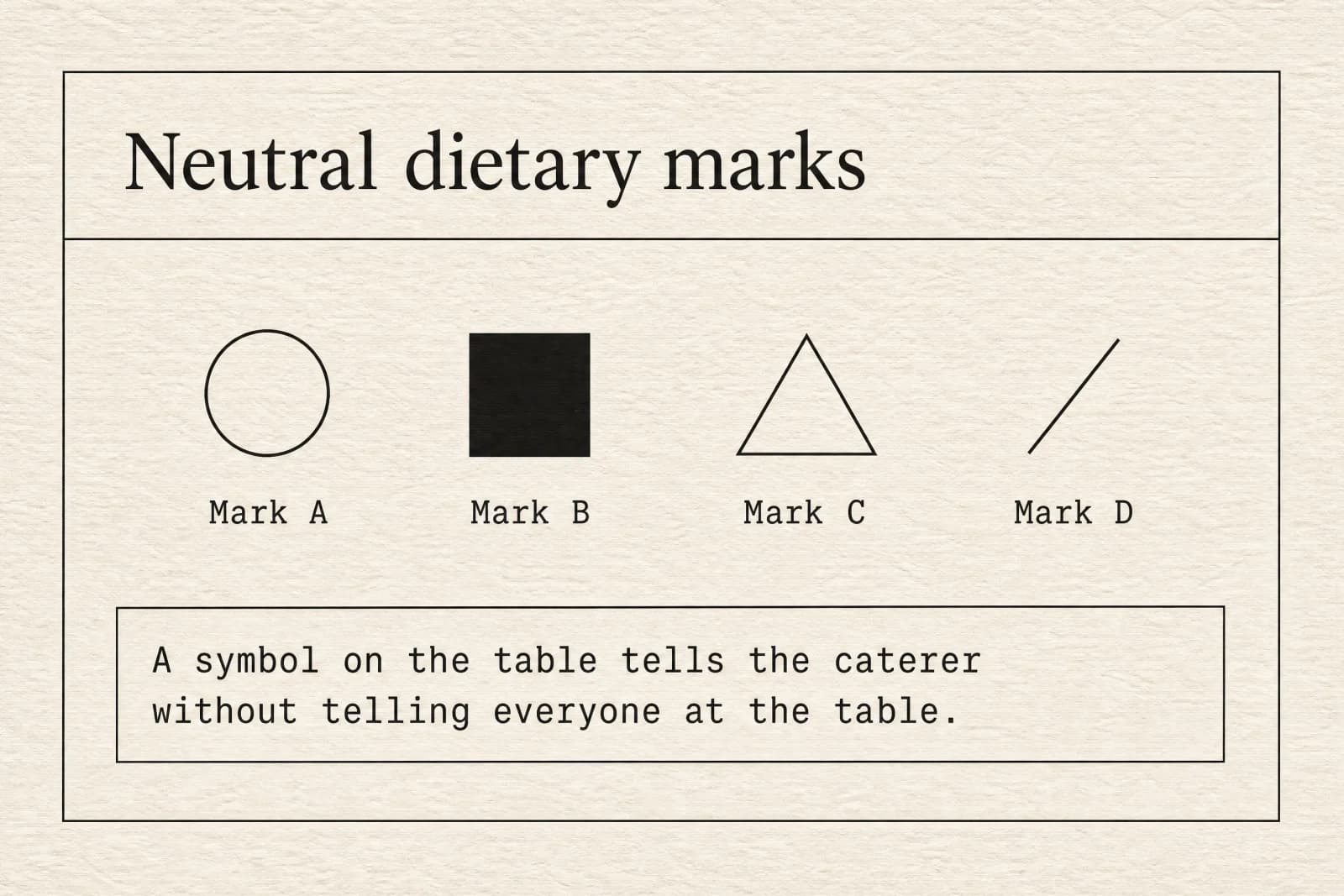
Cards, numbers, marks and the sheet they sit on.